Google Search updates can sound technical, but the main idea is simple: Google wants to show people the most useful, trustworthy and relevant answers. For business owners, this means SEO is no longer only about adding keywords. It is about clear content, helpful answers, better user experience, trust signals and pages that help customers make better decisions.
In This Guide
What Is a Google Search Update?
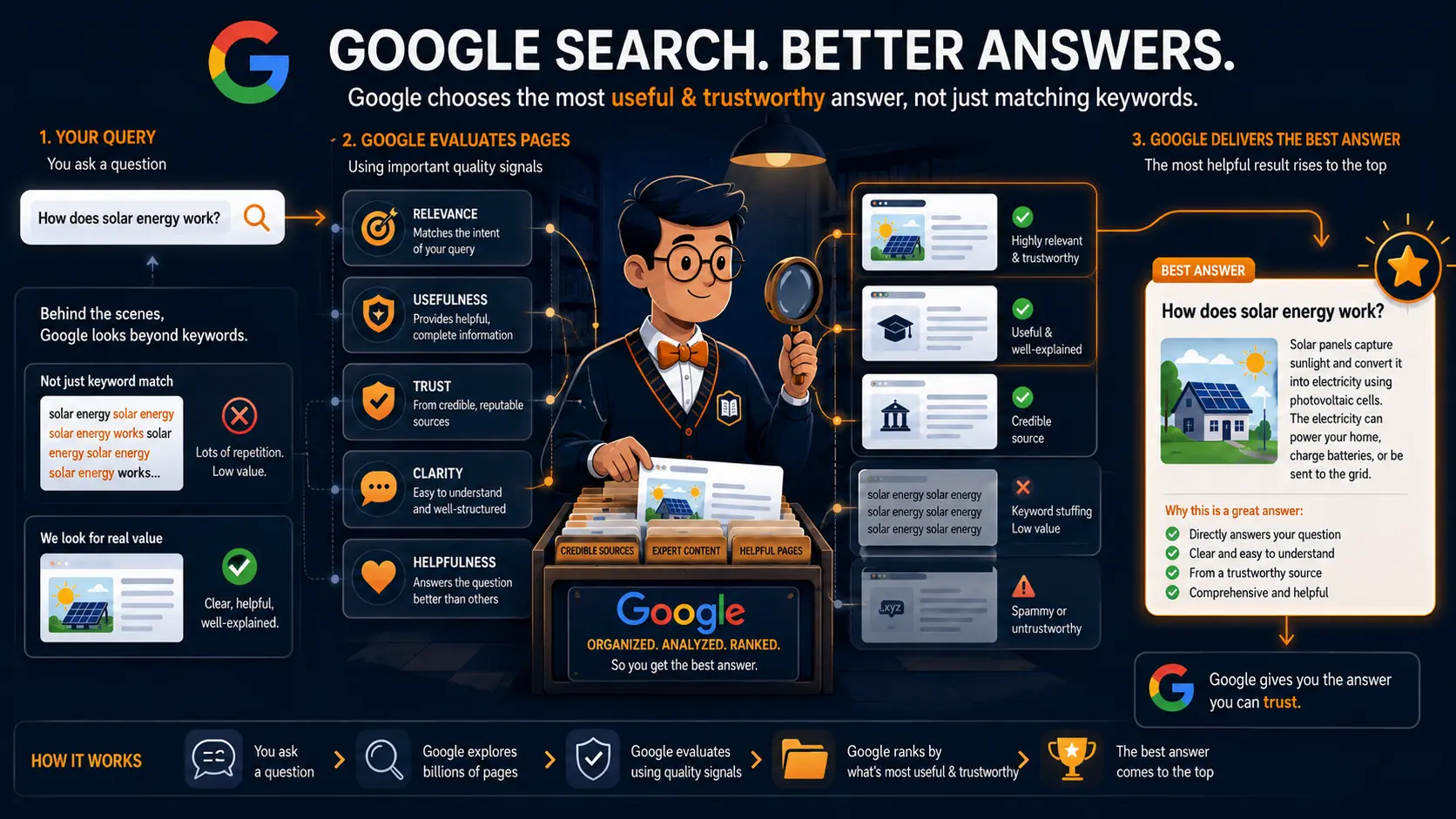
A Google Search update means Google has changed or improved the systems it uses to evaluate, understand and rank web pages in search results.
Think of Google like a very busy librarian. Every day, people ask millions of questions. The librarian has to quickly decide which book, page, guide, video, business listing or website can help the person best.
A Google update is like the librarian improving the way they choose the best answer.
Why Does Google Update Search?
Google updates Search because users, websites and online content keep changing. People now search differently, ask more detailed questions and expect faster, clearer answers.
Earlier, users often searched short phrases like:
- SEO agency
- Google Ads agency
- Digital marketing company
Now, users ask practical questions like:
- Should I invest in SEO or Google Ads first?
- Why is my website getting traffic but no leads?
- How much should a startup spend on digital marketing?
- How do I choose the right digital marketing agency?
Google is becoming better at understanding these deeper questions. That is why businesses need content that explains clearly, not content that only targets keywords.
For example, instead of writing a generic page about SEO services, a business should explain how SEO helps a specific type of customer solve a specific problem. We explain this comparison in our guide on SEO vs Paid Ads.
How Can Google Search Updates Affect Business Websites?
A Google Search algorithm update can affect how much visibility, traffic and leads your website receives from organic search.
If Google starts finding other pages more useful, clearer or more trustworthy, your rankings may drop. If your pages become more helpful than competitors, your visibility can improve over time.
A Google update can affect:
- Website rankings
- Organic traffic
- Blog impressions
- Service page visibility
- Lead generation from search
- Click-through rate from Google results
- Which pages Google chooses to show for important queries
This is why business owners should not treat SEO as a one-time setup. SEO needs regular content improvement, technical checks, internal linking and website experience optimization.
Google Search Is Becoming More Answer-Focused
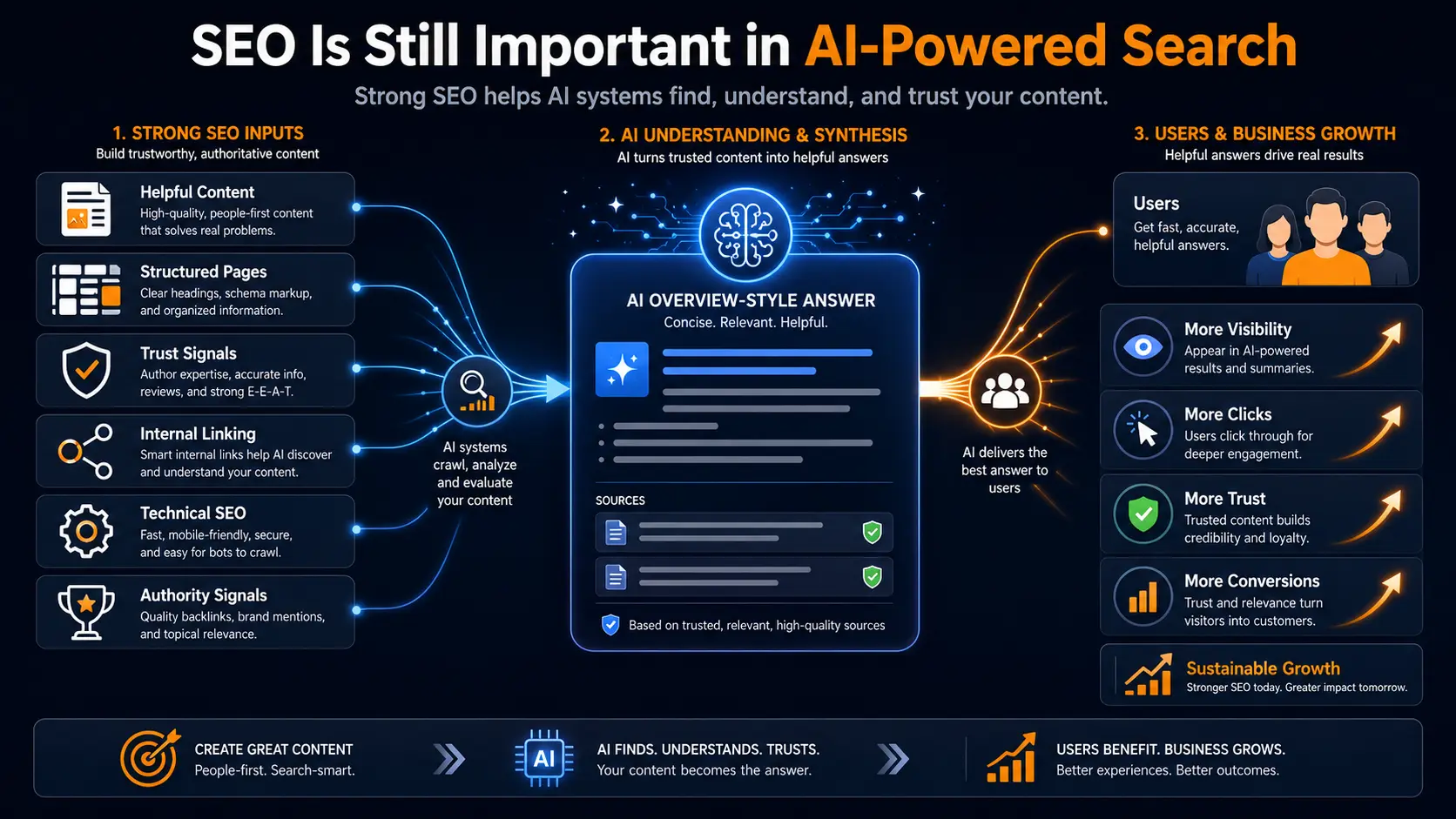
Search results are no longer only a list of blue links. Google may show AI Overviews, featured snippets, videos, images, local listings, shopping results, website pages and direct answers together.
This means your content should be easy for both people and search engines to understand. A page should clearly explain the topic, answer important questions and guide the visitor toward the next step.
What Does Helpful Content Mean?
Helpful content means content that actually solves the reader’s problem. It is not enough to write an article only because a keyword has search volume.
Your content should help the reader understand something, compare options, avoid mistakes or make a better decision.
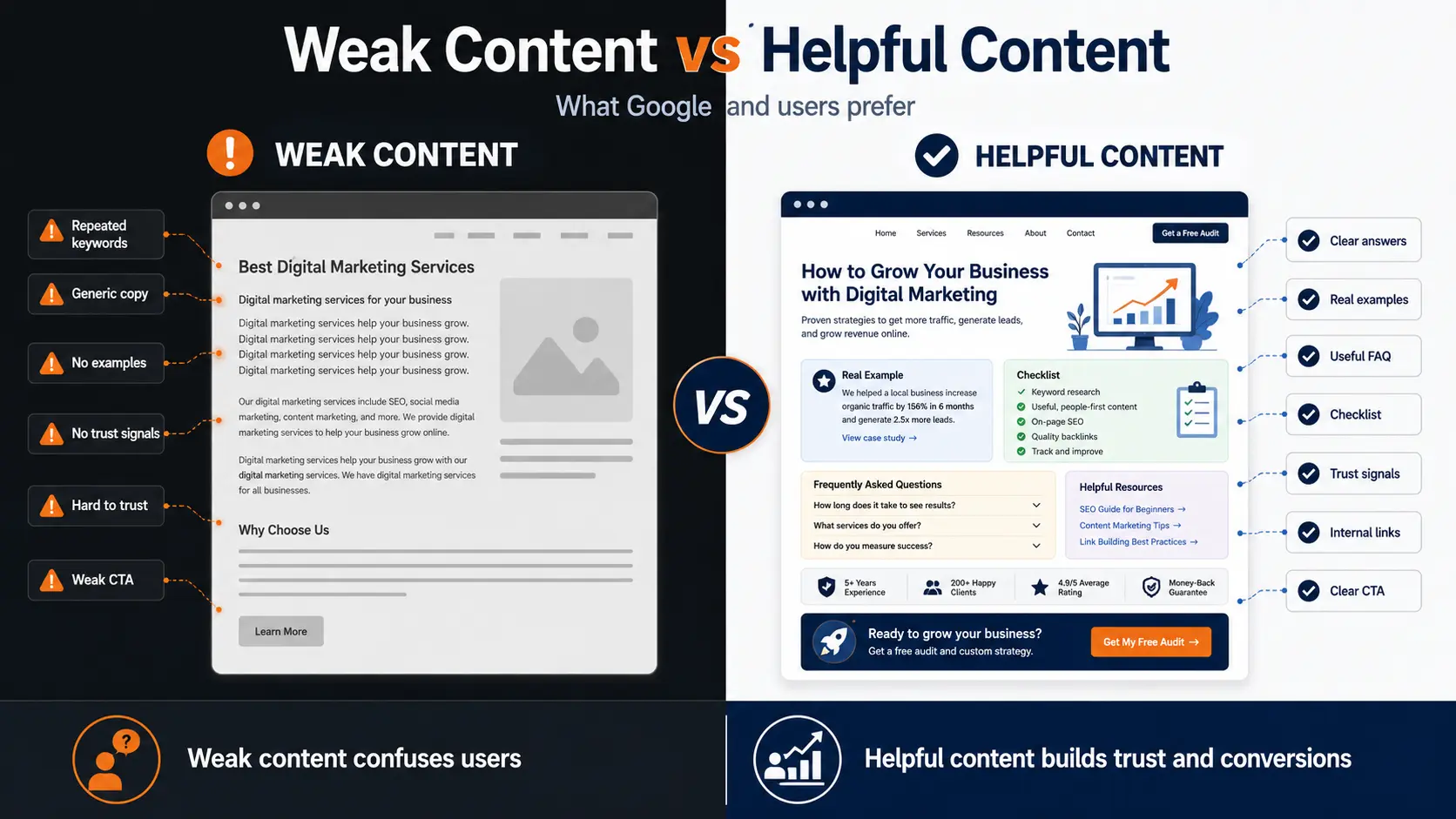
Weak content sounds like this:
SEO is important for businesses. We provide the best SEO services. Contact us for the best SEO agency.
Helpful content sounds like this:
SEO helps businesses get discovered when people search for their services. For example, a website development company may want to rank for searches like “website development for startups” or “business website development services.” But SEO will not work well if the website is slow, has weak content, poor internal linking or no clear contact option.
The second version is stronger because it explains the idea with a practical example. This is why articles like Why Your Website Gets Traffic but No Leads are more useful than generic marketing definitions.
Google Is Reducing the Value of Generic Content
Many websites publish articles that look correct but add no real value. These articles usually repeat the same basic points already available on hundreds of other websites.
This is called generic content or commodity content.
For example, an article titled “What Is Digital Marketing?” may explain SEO, social media, paid ads and email marketing in a very basic way. That is not wrong, but if the article does not include examples, decision-making help, checklists, business context or practical advice, it may not stand out.
To make content stronger, add:
- Real business examples
- Simple explanations
- Decision-making tables
- Common mistakes
- Step-by-step checklists
- Original point of view
- Industry-specific advice
- Clear next steps for the reader
Example: How a Local Business Should Understand This Update
Suppose a local interior design company wants to rank on Google.
A weak service page may only say:
We are the best interior designers in Delhi. Contact us for best interior design services.
A stronger service page will include:
- Types of interior design services offered
- Service areas
- Portfolio images
- Estimated process
- Timeline
- Common customer questions
- Budget explanation
- Customer testimonials
- Clear enquiry form
The stronger page helps real people make decisions. That is the type of page Google is more likely to understand and trust.
Do AI Overviews Mean SEO Is Dead?
No. AI Overviews do not mean SEO is dead.
SEO is not disappearing. But old SEO tactics are becoming weaker. Thin SEO pages, keyword-stuffed articles and mass-produced generic content are becoming less effective.
This is why businesses should not only ask, “How do I rank?” They should also ask, “Does this page genuinely help the visitor?”
A good digital marketing strategy connects SEO, content, website experience and conversion. We explain this complete approach in What Services Does a Digital Marketing Agency Provide?.
What About AI-Generated Content?
AI-generated content is not automatically bad. The problem starts when businesses publish AI content without editing, examples, expertise, business context or real value.
Bad AI content example:
A website publishes 100 articles in one week. Every article has similar headings, generic explanations and no real examples.
Better AI-assisted content example:
A business uses AI to create a first draft, then adds its own examples, service knowledge, client experience, FAQs, local context, pricing guidance and original recommendations.
The second approach is safer because it creates content for real readers, not just search engines.
Which SEO Shortcuts Are Risky After Google Updates?
Google does not want websites to use shortcuts that create low-quality search results. This includes spammy content, copied content, misleading pages and backlinks created only to manipulate rankings.
Risky SEO shortcuts include:
- Publishing mass-produced low-value pages
- Copying content from other websites
- Using expired domains only to manipulate rankings
- Creating pages only for search engines
- Adding fake reviews or misleading claims
- Using keyword stuffing
- Building spammy backlinks
- Publishing guest posts only for link manipulation
These shortcuts may create temporary movement, but they do not build a strong long-term SEO foundation.
What Is a Core Update?
A core update is a broad change to Google’s ranking systems. It does not usually target one specific website. Instead, Google improves how it evaluates content overall.
Why Some Websites Lose Traffic After Google Updates
A website may lose traffic after a Google update for many reasons. A traffic drop does not always mean a penalty. Sometimes it simply means Google now finds other pages more useful.
Common reasons for traffic drops:
- Competitors created better content
- The website content became outdated
- The page was too generic
- The content did not fully answer the search intent
- The website had weak trust signals
- The page had poor user experience
- The website relied too much on low-quality SEO tactics
The right response is not panic. The right response is a structured content and SEO review.
Do FAQ Sections Still Matter?
Yes, FAQ sections still matter for users. But they should not be added only for SEO tricks or rich results.
FAQs should answer real customer questions. They should reduce doubt and help the visitor move closer to action.
Useful FAQ examples for a digital marketing agency:
- How much should a startup spend on digital marketing?
- Should I choose SEO or paid ads first?
- How long does SEO take to show results?
- Why is my website getting traffic but no leads?
- How do I know if my Google Ads are working?
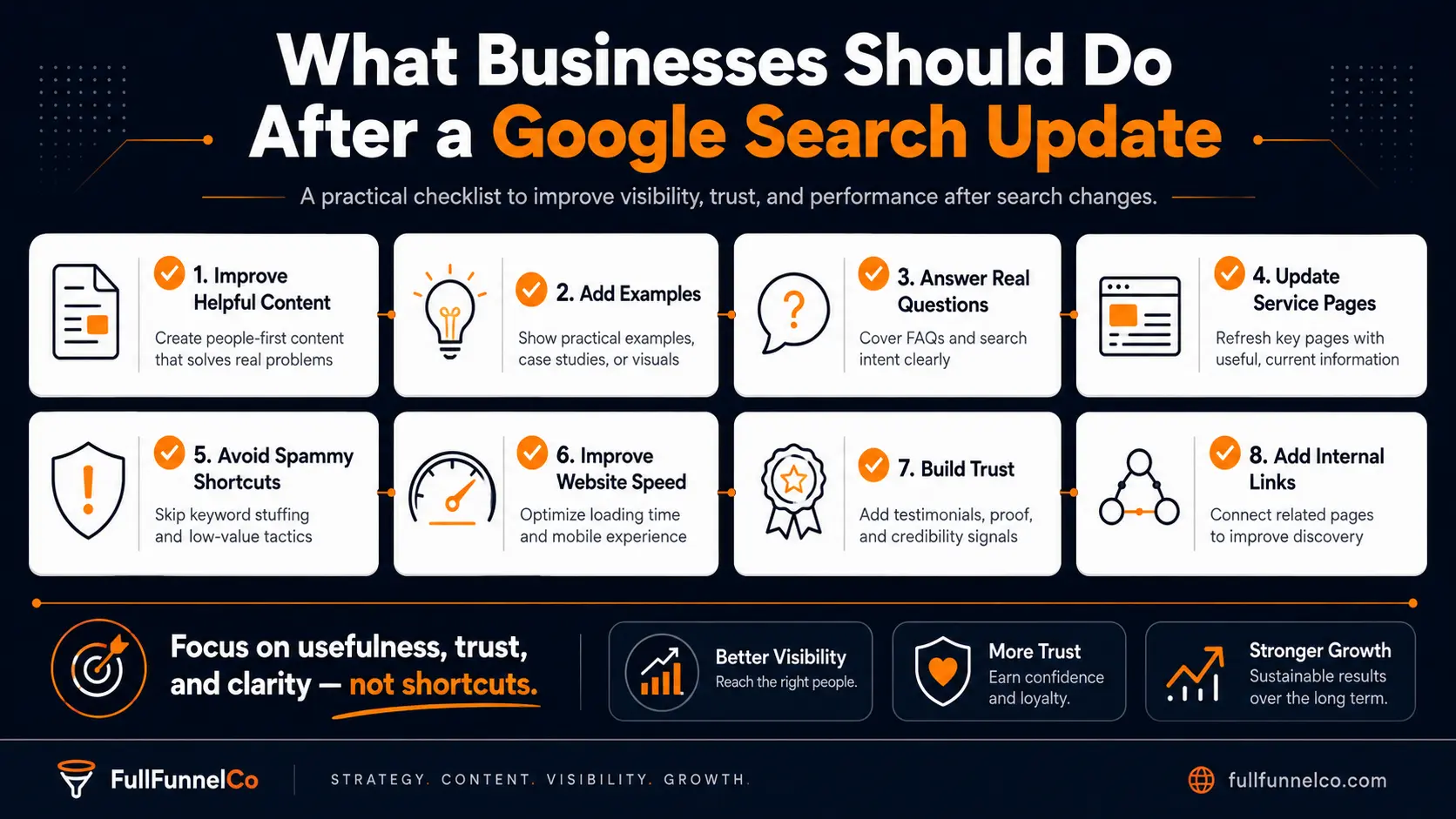
What Should Businesses Do After a Google Search Update?
Businesses should not panic after every Google Search update. The better approach is to improve the quality, usefulness and credibility of important pages.
Start by reviewing these pages:
- Homepage
- Main service pages
- Top blog articles
- About page
- Contact page
- Location pages, if applicable
- High-impression pages in Google Search Console
Simple SEO Checklist After Google Updates
Use this checklist before updating or publishing content:
- Does the page clearly answer the main question?
- Is the content written for normal people, not only for search engines?
- Does the page include practical examples?
- Does it show experience or real business understanding?
- Is the information updated?
- Does the page have clear headings?
- Does it include internal links to related pages?
- Does it guide the visitor toward the next step?
- Is the website fast and mobile-friendly?
- Does the content avoid exaggerated claims?
Example: How a Digital Marketing Agency Page Can Be Improved
Instead of writing only:
A better page should explain who the service is for, what problem it solves, what process the agency follows, what deliverables are included, how success is measured, what timeline the client should expect and which businesses are the best fit.
This helps visitors understand the service better and helps Google understand the page context better.
For example, if you want to evaluate an agency before hiring one, read our guide on how to choose the right digital marketing agency.
What Type of Content Will Perform Better?
Content that helps users make decisions will usually be stronger than content that only defines terms.
| Weak Topic | Stronger Topic |
|---|---|
| SEO Services | How SEO Helps Small Businesses Generate Leads Without Depending Only on Ads |
| Google Ads Agency | Why Your Google Ads Are Getting Clicks but Not Leads |
| Digital Marketing Agency | What a Digital Marketing Agency Actually Does and How to Choose the Right One |
| Website Development | Why Your Website Gets Traffic but Does Not Convert Visitors into Leads |
The Simple Rule for Every Website Owner
Before publishing any article or page, ask one question:
If the answer is yes, the content has value. If the answer is no, the content may only be SEO filler.
FAQs on Google Search Updates
Is a Google Search update the same as updating the Google app?
No. A Google Search update usually means Google has changed how it evaluates and ranks web pages in search results. It is different from updating the Google app, Chrome browser or Android settings.
Can a Google update affect my website traffic?
Yes. If Google finds other pages more useful, clearer or more trustworthy, your rankings and traffic may change. Your website can gain or lose visibility after an update.
What should businesses do after a Google update?
Businesses should review important pages, improve helpful content, update outdated information, add examples, strengthen internal links, improve page experience and avoid spammy SEO shortcuts.
Does a traffic drop always mean Google penalized my website?
No. A traffic drop does not always mean a penalty. Sometimes competitors improved their content, search intent changed or Google started ranking more helpful pages higher.
Is SEO still useful with AI Overviews?
Yes. SEO is still useful, but weak SEO is becoming less effective. Businesses need clear content, strong service pages, good website experience, trust signals and practical answers.
Final Thoughts
Google Search is changing, especially with AI Overviews and more answer-based results. But the basic principle remains the same: useful content wins.
Businesses should not chase every small algorithm update. They should focus on creating pages that genuinely help customers understand, compare and decide.
The best SEO strategy is simple:
- Explain clearly
- Answer real questions
- Use practical examples
- Build trust
- Avoid shortcuts
- Keep your website technically clean
- Create content people would actually want to read
At FullFunnelCo, we believe SEO should not be treated as a trick. It should be part of a complete growth system that connects content, website experience, traffic, trust and conversion.
Need Help Making Your Website Search-Ready?
FullFunnelCo helps businesses improve SEO, content, website performance, tracking and lead generation with a full-funnel growth approach.
Discuss Your Growth PlanShare this article
Explore FullFunnelCo
Need help turning traffic into leads?
FullFunnelCo helps businesses grow through paid campaigns, SEO, website development, digital marketing consultancy and brand visibility.